
“Almost by definition, Anti-Racist Community Development work has to account for the historic oppression that residents of color + the organizations that serve them have faced. If we don’t acknowledge the history of structural racism + anti-racist work in the past, it’s going to be that much harder to build the future we’re aiming for.”
– Anti-Racist Community Development High-Level Findings
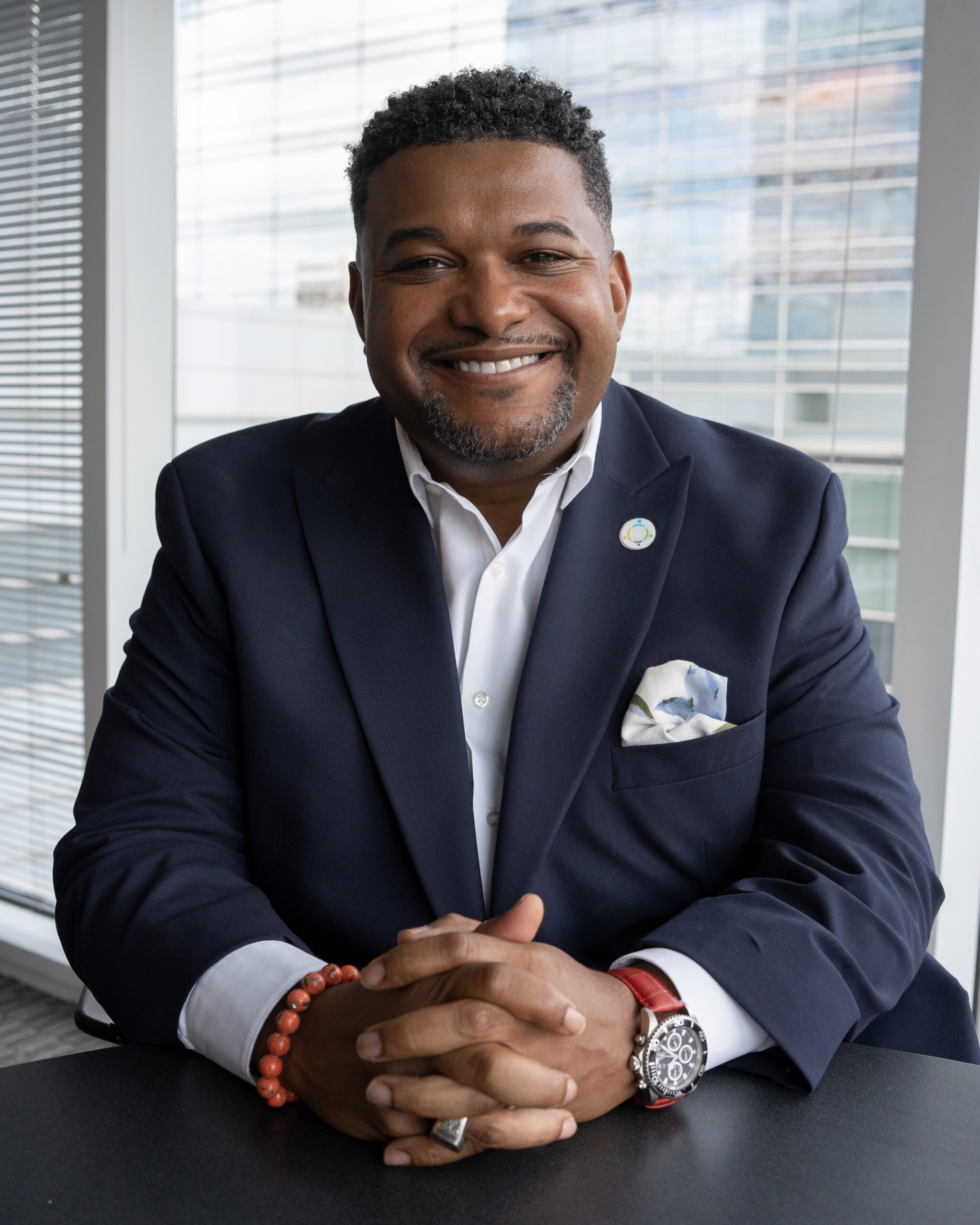
We sat down with Nathaniel Smith of the Partnership for Southern Equity to discuss the impact of history on community development and how it shows up in the sector.
What role do you think that history plays or should play within the field of community development?
Nathaniel: A James Baldwin quote I always use is, “History is the present.” Many of the challenges faced by Black communities and other historically disinvested communities of color stem from the nation’s origins in stolen land and labor, whether it be through eminent domain, slavery, or low wages. Understanding history is key to addressing the root causes of inequities today.
What role have community development corporations (CDCs) played historically, and how has that changed?
Nathaniel: Just like structural racism shows up in different ways, CDCs show up differently in communities as well. In some places, CDCs have been platforms for community agency and advocacy, while in others they have helped accelerate gentrification. Much depends on their relationship to power structures and financial institutions. When it comes to land use and development, CDCs are happy to work with financial institutions, but they don’t have to be driven by them. In some places, the CDCs have been designed to primarily serve the financial, political power, and civic power systems rather than to be correctors of these systems.
Given the historic tie between slave plantations and prisons, could you speak to the linkage between the prison industrial complex and rural community development?
Nathaniel: Prisons, especially in rural areas, have been used as an economic development strategy, warehousing Black and brown bodies as a commodity. It’s a shame because these apparatuses are created through government dollars; you’re using prison labor to make profit, and you’re counting prisoners in the Census, despite the benefits of being in that community not being equitably distributed. In the South, it’s very prevalent; it’s like we created an opportunity for folks to become slaves by being arrested.
You’ve mentioned a “values revolution” as a key part of organizing work. Could you speak more to that?
Nathaniel: Policy is a reflection of the values of people in power. Therefore, values change must precede or accompany policy change for it to be effective and lasting. For us to win, we must replace dominant values and a worldview of white oppression with a different worldview. We focus much of our work around Black liberation because we believe there is a Black worldview to be lifted up. The white worldview tends to be extractive, transactional, built on a culture of scarcity, and not connected to our planet. To replace that worldview with a new worldview, there must be a values revolution.
You mentioned a focus on Black liberation, which often includes reparative frameworks and healing. What is the relationship between reparations and reparative approaches and healing?
Nathaniel: Many people are using the term “reparations” when talking about restitution. Reparations require not just money, but also repentance, opportunity for healing, and repairing the spirit of harmed communities. Restitution focuses mainly on financial compensation. Both are needed, but reparative justice is more transformative. Repair requires work of the heart, creating opportunity for people to see each other and understand the harm and the damage that communities have faced. I’m not saying that restitution is not important, but we need a reparative agenda, and I think those are just two different things.
Closing the racial wealth gap is often discussed as a goal and approach for advancing racial equity. So I’m just thinking about how you would characterize that distinction between addressing racial wealth divide and achieving Black liberation?
Nathaniel: Wealth does not equal freedom. Being free means that you’re just as much willing to give something up as you are to get something. I don’t think a lot of people understand that. The big challenge around the wealth gap is that Black folks and historically disinvested communities of color are still centering our value in whiteness. To get free, we must stop doing this and resist the worldview that hasn’t benefited us.
We have to translate and replace public decisions and policies harming our communities with policies that heal our communities, and then we can move into repentance. As a sector, we need to position people to acknowledge what they’ve done and work with the people they harmed to move forward. Then we move to the repair of people and places and begin the last piece around reimagining and reinventing a world aligned with our values as a community. Sometimes the work is not linear, but when people choose not to do it, we see efforts to overturn things like Roe v. Wade or the Civil Rights Act.
Are there any closing thoughts you have for folks doing anti-racist community development work, particularly practitioners?
Nathaniel: We recently acquired EcoDistricts, where we’re developing a new protocol centered around racial equity and land use and development, and are reminded that you can’t do effective community economic development work without understanding the effects of a country built on stolen land and labor reverberating today.
You need this to successfully create communities that are reparative and healing for Black people and historically disinvested communities of color. You must do your homework and read and learn. You must understand the ripple effect that we still deal with today and be willing to disrupt that, but you can’t disrupt something that you don’t know about. You can’t just be a developer. You also have to be a systems thinker, a multi-solver, all of these things. It’s not just about building units and organizing people. You have to understand your work within the context of a system.
Nathaniel Smith is the founder and Chief Equity Officer of the Atlanta-based Partnership for Southern Equity. A child of Southern Freedom Movement Activists, Smith works to move forward an equity agenda that advances just outcomes that are sensitive to the needs and circumstances of communities and erases the barriers that stand in the way of people reaching their full potential.
The interviewee is responding to the findings shared in the anti-racist community development Research Project, produced with support from Robert Wood Johnson Foundation (RWJF) to increase understanding of structural racism in community development and pathways to racially equitable outcomes that promote health equity. The views expressed in this article do not necessarily reflect the views of RWJF or ThirdSpace Action Lab.
© 2023 Robert Wood Johnson Foundation