
We grabbed time with Rasheedah Phillips to talk through movements that have shaped equitable community development in the past and what they tell us about time, space, replication, and scale in the sector today.
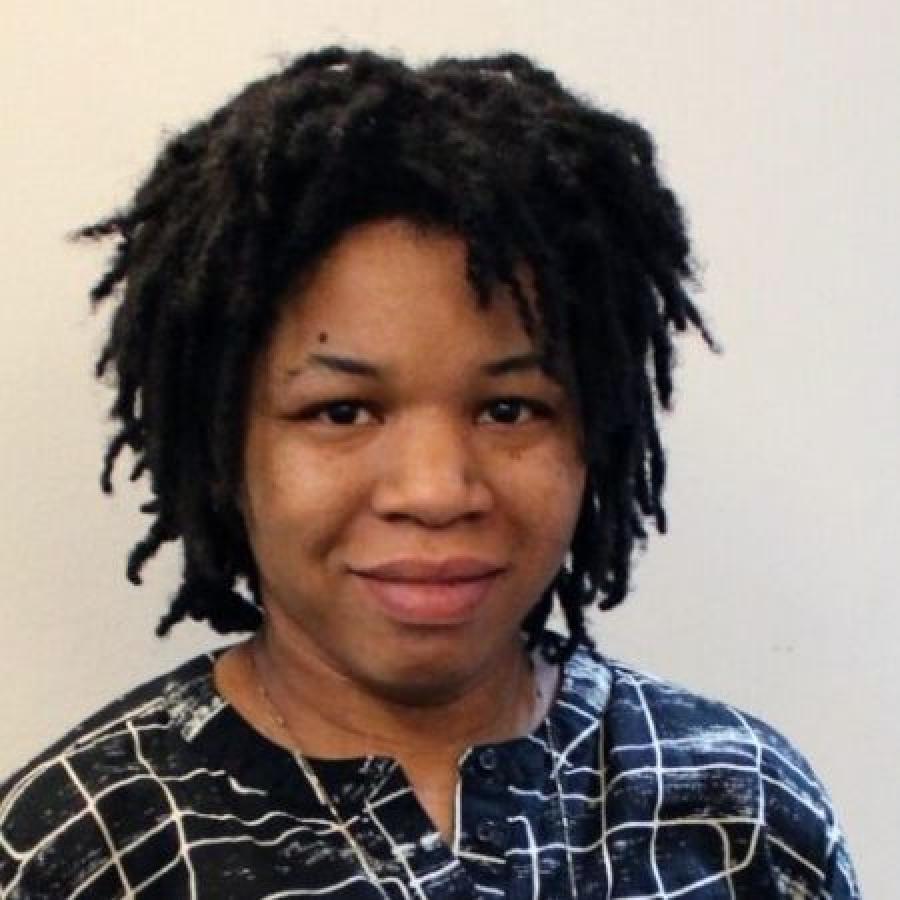
To start, tell me a little bit about your work.
Rasheedah: I’m currently serving as Director of Housing at PolicyLink, which is a national research and advocacy organization that serves the 100 million people in the United States who are at or below the poverty line. I spent most of my career as a housing attorney in Philadelphia, representing people who were facing eviction and homeowners facing foreclosure and then also affordable housing policy at a local, state, and national level. At Community Legal Services of Philadelphia, our model was both direct representation of people facing issues and also doing policy work around those same issue areas. Prior to doing housing work, I worked in the Community Economic Development unit at CLS, where I represented nonprofit organizations and childcare providers, helping them to develop their businesses – to go through the process of getting zoning and getting licensed and renting out a building.
Are there specific reference points that have informed how you approach community development work or issues of housing specifically?
Rasheedah: I think the Civil Rights and Fair Housing Movements were extremely pivotal moments around creating the conditions in which community development would happen. Another was the movement around Community Land Trusts, which emerged as an effort to provide people with access to affordable housing, promote community ownership, prevent gentrification, and move toward seeing housing as part of the broader fabric of a healthy and thriving community. Another important moment was the public housing movement and its insights and tactics, particularly for Black and low-income folks being at the center of these movements and pushing for needed reforms. I’d also name the social housing movement as important; that’s primarily been in European countries, but it’s definitely emerging in the United States. Folks are learning from social housing movements in other countries and seeing social housing as different from public housing – around what gets built, where it gets built, when it gets built, how long it remains in the hands of government entities. The shift to consider social housing is also an opportunity to think about community ownership more broadly, just like Community Land Trusts, and about really shifting power dynamics back into the hands of the people. These histories in community development play a huge role in how we get to the place where we need to be.
Are there things we could be doing in community development to bring that kind of history forward more productively?
Rasheedah: There are a couple of important things that might sound simple, but it’s how you do them meaningfully. One is centering people most impacted by community development who’ve historically been pushed out – really centering them. You need to think about the different timescales needed in order to operate in a space where we’re actually embedding these kinds of principles in our work. The timelines used in community development don’t lend themselves to meaningfully engaging people. We also need to expand our notion of what community means. “Community” is this very buzzy word … “Oh, we’re going to center the community,” but the community is full of people who have opposing ideas. We need to have a more expansive understanding of how community dynamics operate, instead of just this sort of flat, one-size-fits-all thinking.
The second thing is to actively incorporate historical analysis into the work. What has worked in the past? We need to do a better job of analyzing the strategies, successes, and challenges of previous movements. I’m always struck in working directly with communities by how much they know. I can read all these things about a community, but that never replaces actually sitting down with community members who can tell you what happened because they were there. It’s about going beyond historic analysis in books to doing qualitative research with people who have lived through that history to inform our approaches. This goes back to time and space. It’s much more of a challenge in a post-COVID world, but we need shared spaces where we can all learn about these things and facilitate dialogue – not just conversations that happen once a month when someone’s seeking a zoning variance.
We’ve been hearing a lot about the desire for deeper work in community development opposite really limited time and space. Are you seeing examples of people successfully navigating that?
Rasheedah: We’ve been doing some research on this – especially post-COVID, the innovative ways communities are doing equitable community development. There’s Destination Crenshaw, which is a community development project that is using reparative development frameworks in executing that project. It’s Black-led, it’s connected with culture, it’s not just limited to building physical space but also building up cultural resilience and engaging community in thoughtful, non-traditional ways. They’re embedded in the community as a part of the development project, not just flying in and doing something.
Another is Africatown Community Land Trust, a Seattle project that’s doing community development work through this very culturally-informed land trust model using Afrofuturist cultural frameworks and has stakeholders involved at its core. Another is the St. Louis Art Place Initiative, a land trust specifically for artists who have a vested interest in St. Louis. They’re using different ways of approaching community ownership and going beyond housing to also think about how we build assets like parks, galleries, and cultural spaces.
We’ve heard in our research that thoughtful community development models are often dismissed as not being replicable, even when they’re demonstrably working better. Do you feel like these approaches are replicable beyond the context of a specific place?
Rasheedah: I think all the examples I named have been shown to be replicable because they rely on mechanisms that are already in place. The Community Land Trust idea isn’t new, right? We know it works. It’s extremely replicable to innovate around things that already exist. Where we have issues is the extent to which we can scale concepts like social housing throughout Oakland or statewide or nationally.
Part of the work that I do at PolicyLink is thinking about how we impact the 100 million people who have unstable access to housing and homeownership. Scalability comes with narrative shift, with folks believing that these things are possible. It’s not that they are not scalable. It’s just that we will not have resources if people can’t imagine them on a national level. But these models are replicable and proven.
Rasheedah Phillips is Director of Housing at PolicyLink, leading national advocacy to support tenants’ rights, housing, and land use movements in partnership with grassroots partners and government leaders. Rasheedah previously served as Managing Attorney of Housing Policy at Community Legal Services of Philadelphia and Senior Advocate Resources and Training Attorney at Shriver Center on Poverty Law. Rasheedah is also an interdisciplinary Afrofuturist artist who has exhibited and performed work globally.