
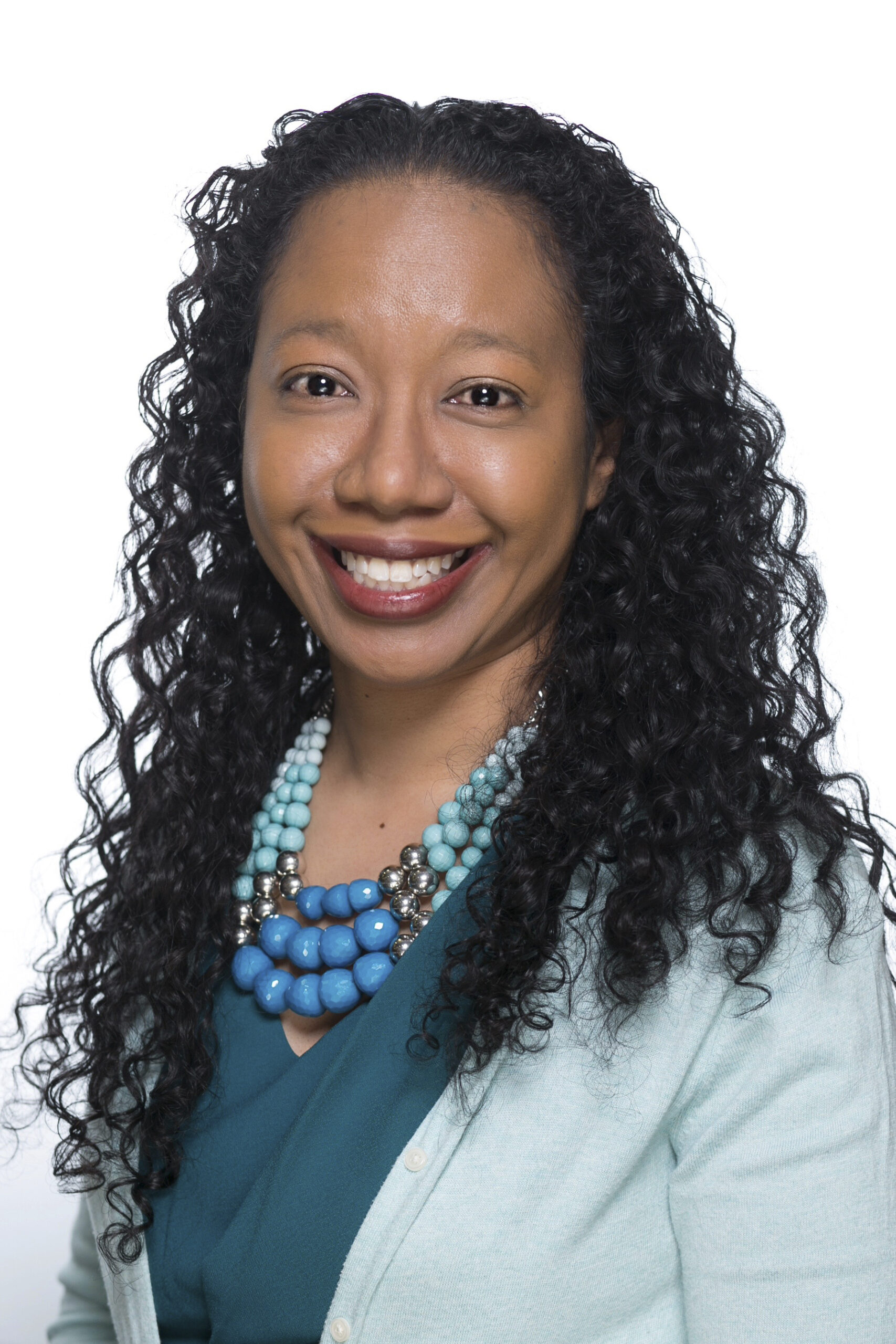
We chatted with Monica Copeland to talk through Minority Depository Institutions (MDIs), mainstream finance, and racially equitable community development finance.
How would you describe Minority Depository Institution (MDI) credit unions to someone less familiar?
Monica Copeland: MDI credit unions are nonprofit cooperatives with three criteria: the board of directors, credit union members (people they’re serving), and potential members (people in their field of membership footprint) must each be greater than 50% people of color. We have examples of MDI credit unions as early as the 1930s, like at Florida A&M University Federal Credit Union. Many Black MDIs were created out of the Civil Rights Movement; some mainstream financial institutions would not lend to African Americans, so these communities created their own lending institutions in response to redlining. That’s also why several Historically Black Colleges and Universities (HBCUs) have or have had MDIs. They were lending to farmers and landowners, as well as supporting each other by forming faith-based credit unions at their churches or mutual aid groups. It’s been fascinating and joyful watching new MDIs open their doors even today, especially because there’s been a lot of consolidation in the credit union industry. There have been several new ones created in Black communities this past year and a recent new one in Montana serving Indigenous communities. There were over 20,000 credit unions across the country at one point. Now there are less than 5,000 credit unions in the United States. About 500 of these credit unions – or about 10% – are MDIs.
What role do MDIs play in communities?
Monica Copeland: They’re often very small in terms of asset size and staff size. Over 80% of them have under $100 million in assets, and they’re usually hyperlocal. They often do small consumer loans as alternatives to predatory payday lending; refinance auto loans; and give out emergency loans. They also really bend over backwards for their members. During the pandemic, some credit union staff made home visits to get people their money when they needed it. Some also work with undocumented individuals. They accept documentation that other mainstream institutions may not, such as an Individual Tax Identification Number (ITIN). It is important that MDIs survive because who else is going to do that with the same passion, commitment, and cultural sensitivity? Who’s going to move into that space of serving the financially underserved? These MDI institutions are found in financial deserts, in rural areas, and areas where there are high concentrations of payday lenders. I think of my parents who were small business owners of a beauty supply store in the Deep South for many years. My father (who has since passed) was Black, and my mother is Korean. They owned few assets and had imperfect credit. They fit the exact profile that these MDI institutions are helping, and that’s why I’m especially committed to this work. MDIs are not known for abusive or predatory financial practices, and credit unions have a cooperative model in which their members are owners of the institutions. If the credit union does well financially, the members also do well.
How do MDI credit unions differ in practice from traditional ones?
Monica Copeland: Many MDIs do not use credit scores the same way as traditional institutions do, and sometimes they do not pull them at all. Mainstream financial institutions often think Black and brown communities and high-poverty areas are “risky” or unserviceable, and they do not want to extend credit. That’s why we have things such as the Community Reinvestment Act. However, MDIs and Community Development Financial Institutions (CDFIs) have proven that you can lend in high-poverty and under-resourced communities, and often the results are the same or even better than mainstream institutions because you’re giving people a chance to have access to capital. Otherwise, they’ll go to a payday lender, a pawn shop, or take out a title loan. The credit unions often take that closer look and say, “What do you have? Can you show you’ve paid your cell phone bill for multiple months?” They’ll take the time to get to know the member, hear the story, and try to make the loan happen. They can’t always say yes to every request, but they try to give the members options on how to fix things so that the denied members can try again later.
In 2008, the state of Arkansas banned payday lenders. Some people felt they did the right thing, except it created a financial desert. A local barber in Little Rock found that people started coming to him for loans. He started making small loans, and then he created a CDFI loan fund called People Trust Community Loan Fund, and then he created a credit union. In another example, the Navajo Nation sued Wells Fargo for predatory practices, and locals would like to create their own credit union to have community ownership, which is not as easy as it once was. Nowadays, it takes $1 – 3 million to start a credit union from the ground up, not to mention several other logistical and operational hurdles. That’s not feasible for many communities of modest means.
I’ve heard several people share what you just did – that losses incurred from communities of color does not differ widely from what mainstream institutions experience. Is this data shifting the risk narrative at all?
Monica Copeland: I wish I could point to a recent report that shows the trend is changing, but I can’t. Low-income people continue to be viewed as less desirable customers. Mainstream banks will always go for higher net worth clientele as their preference. You can have decades of data showing risk and losses are comparable, but the risk narrative doesn’t change. However, I will say that people can’t dispute the fact that the demographics of our country are changing. We launched the New Majority Growth Initiative, with funding provided by Citi Foundation and JP Morgan Chase, because the U.S. Census is saying by 2040 or so, people of color will be the U.S. majority. You can’t ignore this market. You can’t overlook communities of color, or you’ll be missing out on a significant number of people with growing financial needs for themselves and their families.
How do people find MDIs?
Monica Copeland: There’s a directory of MDI credit unions on the National Credit Union Administration (NCUA) website, but those are the ones that have self-designated as MDIs. Opportunities Credit Union in Vermont is an example of a great non-MDI credit union. They’re working with the Hispanic population, but there are obvious limitations in reaching the 50% or more threshold required in the MDI definition. Institutions can be more financially inclusive by accepting different documents, changing products, tweaking fees, or having a bilingual staff. You don’t have to be an MDI to do those things. All financial institutions (both banks and credit unions) can make concrete changes to address racial equity in a meaningful way. There are quick fixes and deeper, more intentional strategies.
I’d like to stress with this piece that MDI credit unions do exist. They may be harder for people to find, but there are over 500 of them (plus an additional 150 MDI banks), and they’re doing important and impactful work. Most people think of Black banks when they hear the term MDI, but not Black, Indigenous, Latino, or Asian American credit unions. They don’t have the advertising budgets, so you may never see a commercial for them and may not see a website. That does not mean they’re not legitimate, regulated, and insured financial institutions. Your money is safe and federally insured through NCUA with credit unions, similar to FDIC insurance with banks.
What are some promising practices you’re seeing from MDI credit unions?
Monica Copeland: Stepping Stones Community FCU and Lower East Side People’s FCU both have mobile vans to reach members where they are. They will bring the bank to neighborhoods that do not have physical branches. Having that kind of transportation-based strategy is also vital for rural communities like Lakota FCU. Microsites or micro-branches are another strategy, where credit unions will sometimes have a staff member co-located in a heavily populated place such as social service agencies, Catholic Charities, or the Mexican Consulate to offer financial services. This way, you’re bringing financial services to the people while they are taking care of other business. It’s really about creating products and services that are customized to what people need and naming products in a way people can relate to, like “citizenship loan” or “quinceañera loan”. Stepping Stones Community FCU also has a partnership with the Delaware Department of Correction to open accounts for incarcerated individuals. When they are released, they have a credit union account and relationship which helps them reacclimate. We also have a credit union in San Francisco, Northeast Community FCU, who just developed a culturally-nuanced trilingual mobile banking app for their members who speak English, Spanish, and Chinese.
Is there anything else you’d like to say about MDIs but haven’t had a chance to?
Monica Copeland: I’m so proud of what MDI credit unions accomplish on a daily basis. They are under-resourced and underinvested in, and that has been true for decades. For them to accept all of those other forms of identification and documentation (and not just to rely on credit scores, AI, or automation , to hear members’ stories) – those can be high-touch or time-consuming human interactions. MDIs are not second-class institutions just because they don’t fit status quo banking. Sixth Avenue Baptist FCU is a great example of a $5 million faith-based MDI in Birmingham, Alabama. Dr. Martin Luther King, Jr., made speeches from the pulpit of that church, and they have a full-service, Black-owned, Black-led credit union that was founded in 1963. There is an ATM in the church building; you cannot see that from the street. That’s the powerful legacy we’re working to lift up, tell the world about, support with capacity building, and help grow by providing them with grant funding. We want more champions for racial equity and economic justice to support them as well.
Monica Copeland is the MDI Network Director at Inclusiv. She manages initiatives providing technical assistance and resources to help strengthen and grow Minority Depository Institutions, as well as implementing special projects involving financial access and inclusion. Prior to working at Inclusiv, Monica was a Senior Program Manager at Prosperity Now (formerly CFED) and worked at the NYC Office of Financial Empowerment (OFE).