
Sarah Imran is a mission-driven artist and academic, committed to building a more gender-just and liberated future. She is currently pursuing a PhD in Political Science at the University of Cincinnati, specializing in transnational feminist movements, feminist futures, and decolonial Global South scholarship. In addition to her academic research, Sarah is the Digital Media Manager at the International Feminist Journal of Politics, and she serves as a researcher and artist for Pakistan’s annual Aurat March (Women’s March).
Sarah is a feminist artist and illustrator whose creative practice explores themes of justice, radical care, and feminist futures. Her art draws inspiration from feminist movements, nature, joyful design, her Pakistani roots, and her daughter.
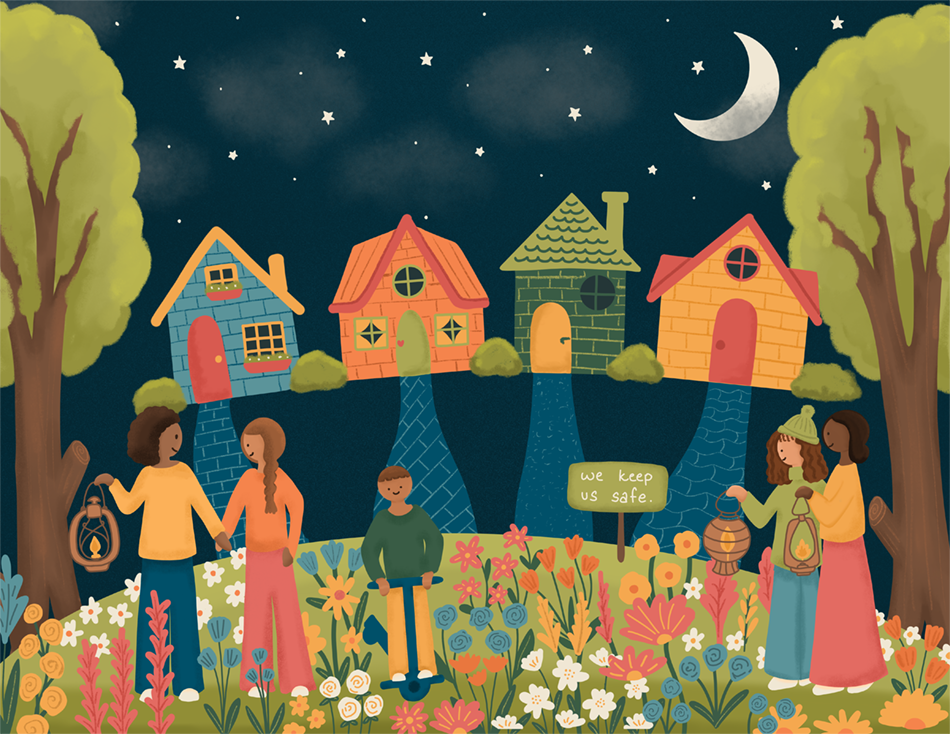
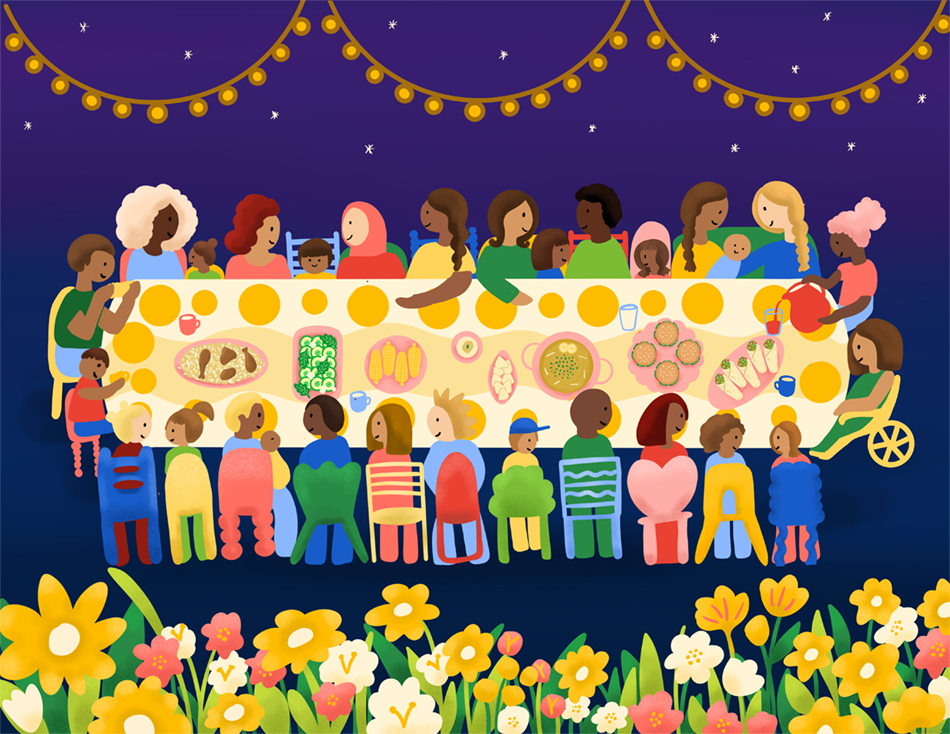
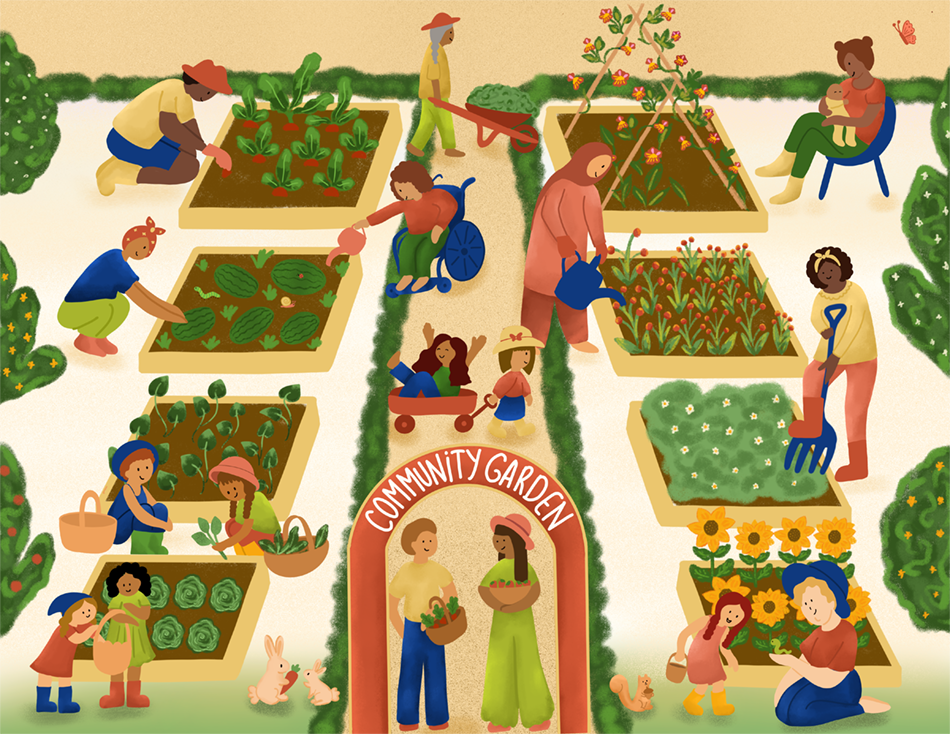
In these three illustrations, I imagine a future where community care, mutual aid, and interdependence form the foundation of how we live together.
In Community Dinner, a multigenerational and multicultural group gathers around a shared meal, symbolizing nourishment, belonging, and connection. Community Garden celebrates collective stewardship of the land, where tending to soil becomes an act of care, connection, and community building. Community Safety envisions an abolitionist future where safety emerges from relationships, not policing. The message “We keep us safe” shines as a guiding light of care and accountability.
As a researcher currently writing my dissertation on decolonial feminist futures, my creative work often explores how art can help us practice new worlds. I draw inspiration from thinkers like adrienne maree brown, Mariame Kaba, Andrea Ritchie, and the collaborative text We Grow the World Together: Parenting Toward Abolition. Their work reminds me that imagination is a political act, and that futures rooted in anti-racism, anti-colonialism, and radical love must be actively rehearsed in the present.
I made sure to include children in each illustration, because as a mother to a three-year-old, I think deeply about how we co-create these new worlds with our young ones. Children embody the bold imagination and openness required to build futures where all can thrive. Elders hold wisdom and memory. In the richness that comes from collaboration across generations, we can build generative spaces for transformation. We can build a world rooted in equity, care, and collective flourishing.