
We caught up with Kavya Shankar to discuss anti-displacement strategies rooted in community collaboration.
First, tell us more about your work, and what drew you into the work.
Kavya: The most formative experience for my current role was working on the Obama Presidential Center, an over $800 million investment onto the South Side of Chicago, a neighborhood that has been unjustly denied access to investment for a very long time. In talking with residents, there was a lot of excitement around investment after a long time of disinvestment, but also curiosity and fear around who this investment was really for and whether they could continue to afford living in the neighborhood.
I felt like even well-intentioned actors didn’t have the tools to help neighborhoods invest in themselves without sacrificing affordability and belonging. This was my own inspiration for Trust Neighborhoods. We work with communities through a model called the Mixed-Income Neighborhood Trust. Today, we are in five neighborhoods across the country, with MINTs owning over 250 units of housing, and they’re continuing to grow, and we’re continuing to work with new neighborhoods.
So what exactly is a Mixed-Income Neighborhood Trust (MINT), and how does it work?
Kavya: Trust Neighborhoods works with existing neighborhood-based organizations starting to worry about pricing pressure to launch a MINT. This includes two linked entities: a holding company managed by the local neighborhood organization that acquires, renovates, and builds the portfolio, and a perpetual purpose trust that holds control of the portfolio and is legally required to serve those purposes forever. The purposes are co-authored with the community, often including priorities like anti-displacement, affordability, and belonging.
This model ensures that the portfolio outlives any one individual or institution and is legally required to serve those purposes forever. The trust structure ensures that in 50 years, everything won’t get converted to market rate, and the properties can’t be sold to build something else. This is permanent affordable housing for the community.
The housing itself is scatter-site, integrated into the existing neighborhood. Units might be single family homes, duplexes, or larger multifamily buildings. A minority of units can float to market rate to help pay for keeping the rest of the portfolio affordable and to help sustain the portfolio.
We have three primary goals. One, minimizing displacement, making sure that renters are able to continue to afford to live in the neighborhood. The second is improving the housing quality. A lot of the MINTs buy out properties from absentee or negligent owners, and they improve the quality of the housing in the neighborhood. And the final way is shifting community power, centering decision-making in community, rather than with outside investors or developers.
That’s such a critical point, and I’m wondering if you can share more about how the community partnership works.
Kavya: Community is very much the center of all the work. Trust Neighborhoods always starts with an existing neighborhood organization that already has the legitimacy of the community. That could be East Colfax Community Collective in Denver, a tenant organizing group. Or Growing Together, a Tulsa nonprofit that is part of Purpose Built Communities. Or a traditional community development corporation like Lowell CDC in Fresno, or East Boston CDC. The important part is that they show legitimacy, have capacity, have a track record, and are aligned with protecting affordability for renters.
Many partners have already done strategic planning, which led them to anti-displacement work. East Colfax Community Collective conducted an extensive planning process with immigrant and refugee families in their neighborhood, including a survey in 11 different languages and workshops where members selected the MINT model and down payment assistance as the two tools that they wanted to see. So they came to us with this data and invited us to partner with them.
Once we start, we set up a resident task force who scopes the legal purposes. That includes renters in unregulated housing, worried about the possibility of their rent going up, alongside other homeowners and renters. Upon launching, the two governing boards both include community stakeholders, for long-term community accountability. The portfolio is managed locally, and often contractors and rehabbers are local to the neighborhood itself. Community is embedded into every step of the process.
Anti-displacement work is long-term, but what signs of impact have been seen so far?
Kavya: In Tulsa, the MINT purchased six homes, where other interested buyers were interested in rehabbing the properties and kicking out the tenants. Instead, the MINT kept tenants in place, and renovated their units to quality without raising rents. That’s small but meaningful. In the East Boston Neighborhood Trust, families who had been displaced previously from the neighborhood are actually moving back into units.
I’m especially excited that the MINT backs local talent and expertise, and allows them to work with serious capital. Often, outside players raise private capital with major balance sheets, and the local groups are working with grants and public funds. We want to see major capital take a bet on local groups and let them compete in the same way as private developers. Someone with a giant balance sheet can buy up properties and sit on them to see if the neighborhood goes up in value. What if the neighborhood could do that themselves, and the value actually accrued to them?
What are some of the challenges that arise in launching and running a MINT?
Kavya: The biggest challenge is making sure that the robust infrastructure is in place for this to last forever, from the legal guardrails to the capacity for neighborhood partners to succeed. If there’s a roof that needs to be replaced in 15 years, that’s already in the budget. It’s a lot of work in the start-up phase.
Another challenge is focus. There is always a desire to further lower rents, because there is always a need for even more deeply affordable housing. We need to be really clear about where the MINT fits into the overall ecosystem of housing. No one tool can serve everyone. That’s why we love collaborating with community land trusts, housing authorities, the whole range. MINTs are meant to intervene at a point in time in naturally occurring affordable housing environments, and lock in rents where they are at, serving a critical missing middle.
We’re also grappling with casemaking about building institutional community power. A lot of anti-racist initiatives are focused on individual wealth building. That is critical, but strong institutions create collective agency. Wealth alone is lonely. The goal is not just to have more wealth, it’s to have more community power alongside that wealth.
What else do you hope to come out in the field?
Kavya: Bigger capital bets on communities. Capital needs to take this type of work seriously, not concentrating that capital with intermediaries or outside investors. Not everything has to be a pilot. Often the groups we’re backing have proven success for decades, and that track record deserves to have a big capital bet for them to intervene at scale. What would it look like for philanthropy, not to give a million here or there, but $10 million to allow a group to acquire at scale, get things off the speculative market and into the hands of the community?
I also would love to see funders take the lead from community instead of death by analysis of every single model. We don’t always need to spend money and time and resources vetting this model or this other model. Can we accept what the community says they want and back that vision? We need more community ownership investment across the board.
Lastly, with the volatility we are seeing in real estate right now, what would it look like for community-controlled real estate to meet this moment, so that we don’t replicate what happened in 2008, but rather have a dramatic shift in who owns these assets in this country? That’s a future that’s not only necessary but also possible with models like MINTs.
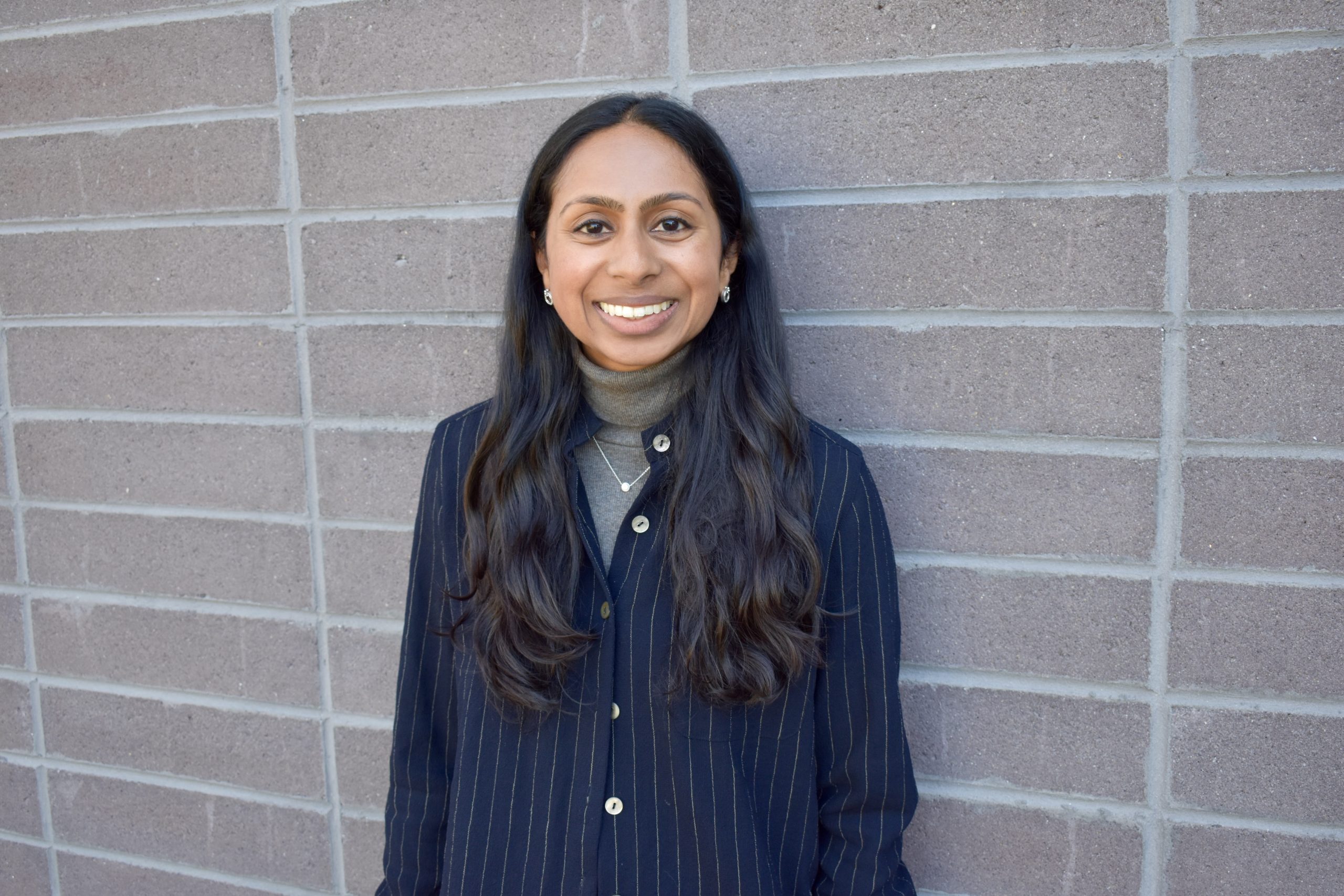
Kavya has dedicated her career to creating more equitable communities. She is co-founder and CEO of Trust Neighborhoods, a national nonprofit that helps neighborhoods worried about gentrification own their own mixed-income rental housing. She started her career at McKinsey and Company, focused on local and state economic development. She has a bachelor’s degree in economics from Harvard College and a master’s degree in business administration from Stanford Graduate School of Business.