

My work imagines a world where Black children move through their environments with ease, wonder, and unbothered autonomy. The three pieces in this series follow different versions of Binky, who is a recurring character in my practice, as she drifts between rest, exploration, and fantasy. Together, they form a quiet manifesto about reclaiming softness in a world that often denies it.
In the first piece, she sleeps on a cloud, fully surrendered to rest. Her messy hair, her silly pose, the softness of the cloud bedding, all of it insists that Black children deserve unguarded, luxurious rest without performance or precarity. It’s a portrait of safety, of a body allowed to simply be.
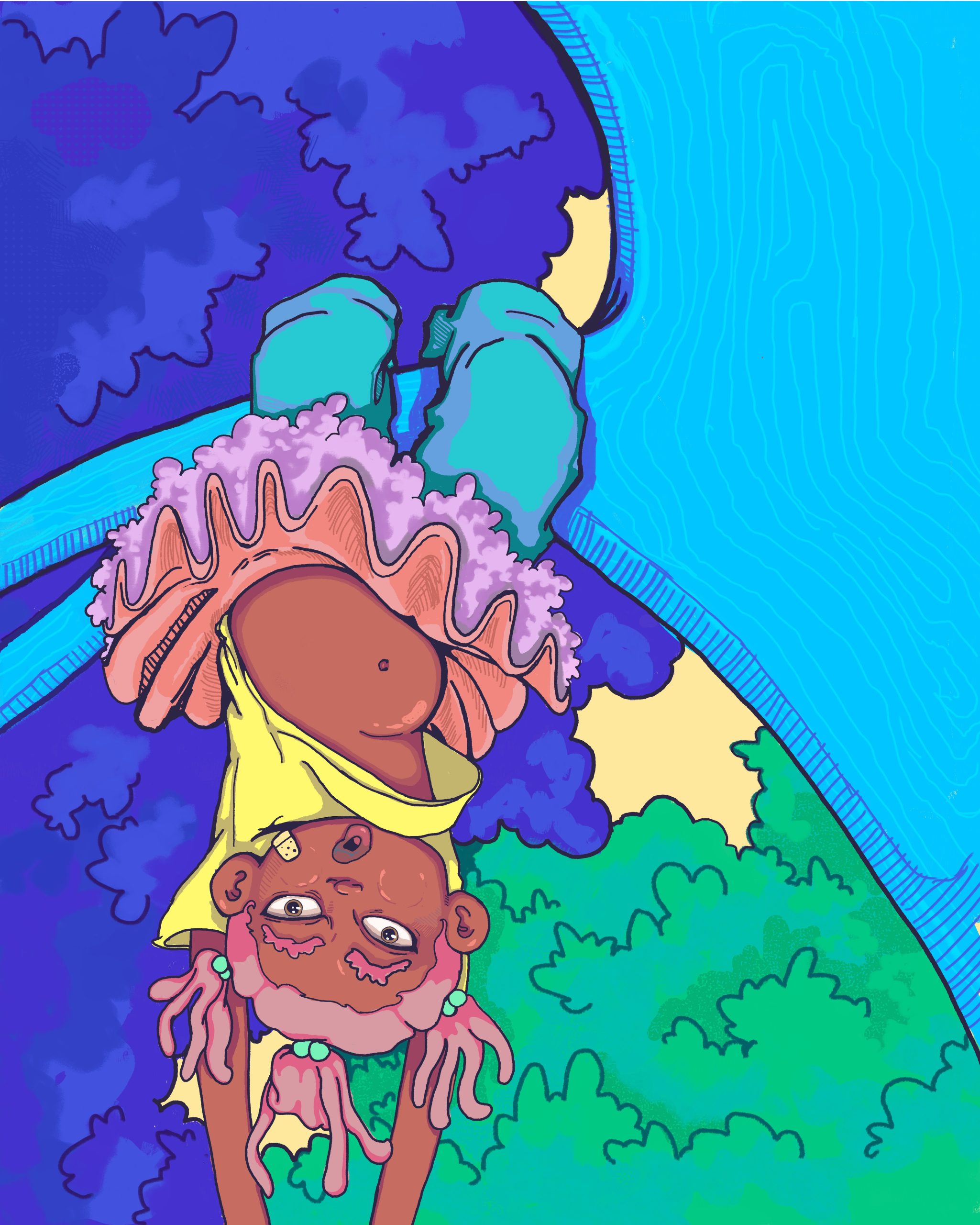
The second piece shows her climbing a tree, claiming height and perspective on her own terms. There’s no adult gaze directing her, no danger narrative imposed on her movement. It’s just a kid being a kid, curious, silly, and grounded in her own joy. For me, this is part of decolonizing the visual language around Black childhood: letting her explore without fear attached to her freedom.
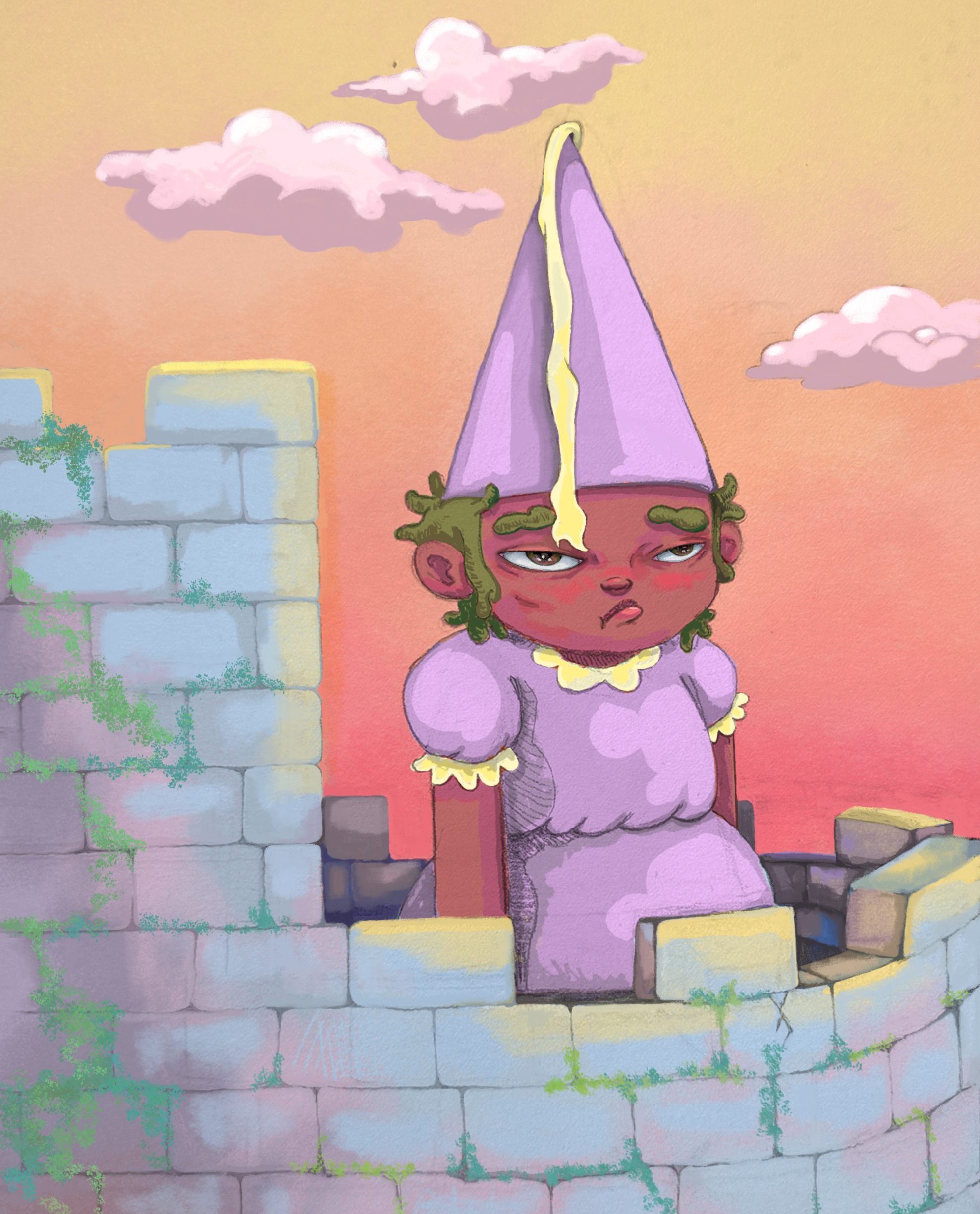
In the third piece, she stands on the balcony of a stone castle in a princess dress, but her expression is wonderfully unimpressed, lip poked out, posture relaxed, almost bored by the fantasy she’s “supposed” to want. I love that tension. It challenges the fairytale tropes we’ve inherited and asks who gets to define what liberation or royalty looks like. She’s in the castle, but she’s not dazzled by it. She’s choosing herself, not the narrative.
Across all three works, I’m building a visual universe where Black coziness, imagination, and agency are centered. These pieces honor the everyday magic of childhood while pushing against the structures that try to confine it. My goal is always to create images that feel like breathing room — spaces where Black kids can rest, climb, dream, and take up space without apology.