
We caught up with Anna Rondon to talk about how environmental issues are impacting indigenous peoples in the American Southwest and just how critical environmental justice organizing is.
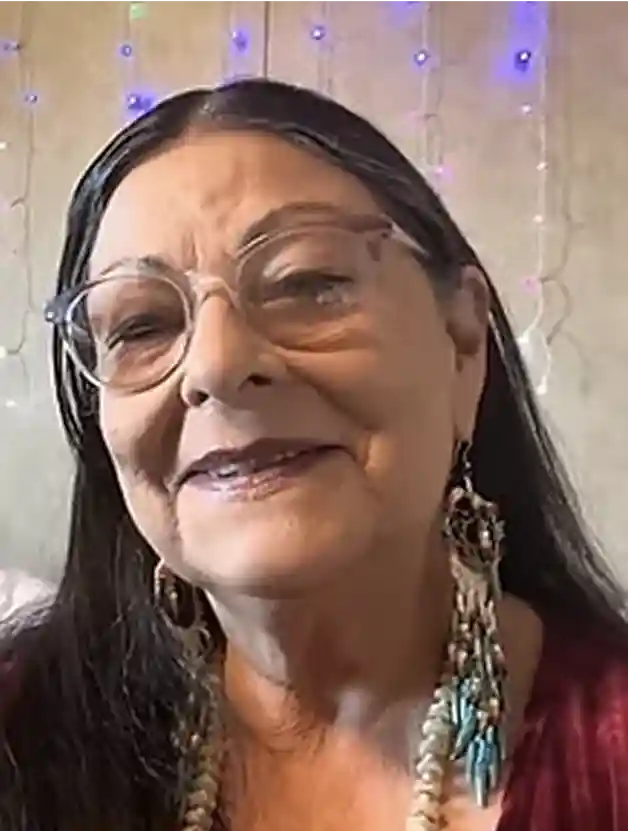
Tell us about your work, how you got into it, and what about your work gets you excited.
New Mexico Social Justice & Equity Institute started in 2014 to pursue health impact assessments on wage theft in Gallup, New Mexico, and also uranium mine waste and health outcomes. We work closely with the National Collaborative for Health Equity, as one of 19 partners in the Health Equity Collaboratives. We also have a state partner called the New Mexico Health Equity Partnership.
I got into community defense around the Red Power Movement in the ’60s and the takeover of Alcatraz. I was involved in the American Indian Movement in Oakland and was around very prominent leaders like Mary Crow Dog. You have to have a spiritual connection doing this work as indigenous peoples. We have a different worldview; it’s complicated because of the boarding school experience. There’s been a historic stripping away of who we are and taking our land, which has had horrible consequences for people, the environment, and our lack of recognition about what’s happening. For instance, the American people don’t know the dangers on the front end of the nuclear fuel chain, which is uranium mining.
What do you think is the place of environmental justice in community development and planning?
What many municipalities and other entities are using is an outdated, non-conforming way of doing planning and development that’s been replicated over and over. From a Navajo perspective, we use the four sacred mountains for our planning and development.
Building training around knowing history first is also critical. Let’s start with the Constitution and the Bill of Rights. If people are serious about going to the root of racist practices, they need to read that we are still considered non-human. We are savages. African Americans are still three-fifths human. What are we doing here?
In terms of community development, community assessment surveys are critical in getting people’s stories. Out here, the communities have to do a land use plan, so you have to implement some type of survey. In my experience, we did mark down all the contaminated water and soils into one land use plan by the Grand Canyon where there was a lot of mining. We took that land use plan to congressional folks, and they found money to clean it up and bring safe drinking water in trucks. That’s how it can help.
What are the kinds of environmental issues that you’re up against today? What’s the community doing around those issues?
We’re creating more public health information. We’re doing indigenous radical public health campaigns, where we go to the root cause and denounce the patriarchal theories that the universities perpetuate. Just by being in existence, that itself is “evidence-based”.
We’re trying to stop the Grand Canyon Pinyon Plain uranium mine. Navajo Nation stopped them from hauling raw material up to Ute Mountain. Havasupai people have been fighting uranium for over 40 years, and the Governor of Arizona is trying to stop it because the company is using an old Environmental Impact Statement. Renewable energy technology is killing our indigenous peoples’ land through extraction of raw materials. In traditional lands of the Apache, Rio Intento intends to make a copper mine a mile long, a mile deep, and that’s on a sacred site.
We’re still fighting energy wars around hydrogen development, we’re fighting pipelines, and we’re also fighting “produced water”. The Governor of New Mexico wants to use fracking water, treat it, and use it as produced water, which to them is new water, but it’s not. It’s a toxic soup of oil and radon. They want to reuse it for agriculture and for the fracking community.
Can you share some examples or strategies that are advancing environmental justice?
It’s up to communities to start growing our own food now, finding ways to capture our own water. Privileged people can move to the safest places during climate change. We’re not going to be able to depend on the federal government 30 years from now, so it’s important that we plan now for 50 years, 100 years later.
Beyond that, there’s not really much we can do except organize, organize, organize. Grassroots organizing is key; it’s what has kept us alive. With Native communities, it’s also about switching the narrative, to make it clear we are still here. You didn’t exterminate us. That’s powerful.
We worked with a coalition that stopped a hydrogen bill in New Mexico last year by mobilizing people at the State Capitol. The governor was putting in $159 million for creating an Office of Hydrogen Development and contracts for hydrogen developers. We squashed that. There are about twelve organizations in our coalition using frontline community defense methods. When we engage, we make sure we are not harming, but when we’re in decision makers’ spaces, we say what has to be said.
I’m interested in your model. How do you do grassroots and activist work and still sustain yourselves?
We’re barely getting by. We got a small grant from Building Equity and Alignment to continue our work. Right now, we’re getting sub-awards from the University of New Mexico on benefits and services for those 55 and over, including Internet access. We’re also trying to reframe our workforce titles to make them more adaptive to what we are actually dealing with. We changed the name of community health worker to social justice worker, and our health partner is called the health equity coordinator.
What keeps you in the fight? What are some hopes that you have for the future for a more environmentally just and healthy world?
We didn’t ask for this, we’re born into it … and multiculturally, too. My mom worked with African American women, and they’re the ones that helped mold her to be loud, and that rubbed off on me. The young people, that’s the hope I really have. My son is a hip hop artist, known as Indigenize the World, and he’s also working with Indigenous Lifeways. My daughter runs that, and if you check out the website, you’ll see what gives me hope because she’s doing a lot. We went with a group of young indigenous women that had the strength to speak and to help us deliver a letter of opposition to Blackstone, a $1 trillion finance company that’s funding hydrogen on our land.
That’s what we do, direct action. It’s still warfare, but we’re doing it in a peaceful way.
Anna Rondon is Kinya’aa’aanii Clan and born for Nakai Dineh and whose grandparents are Tabaaha and Nakai Dine. She serves as Project Director at New Mexico Social Justice & Equity Institute, which works to change systems that perpetuate environmental and health disparities related to the impacts of institutional racism and multi-generational trauma. Anna is a dedicated lifetime advocate for the rights of Indigenous people. For the past 40 years, she has worked in various leadership positions, including for the Navajo Nation government, the Eastern Navajo Agency-Local Government Office, the Navajo Nation Chichiltah Chapter, and the Navajo Nation Department of Health.