
We grabbed some time with Syrita Steib to discuss changing systems and mitigating harm.
First, can you share more about how you came to community development?
When I think about community development, I think about where I live, but also the communities I belong to because of my gender, race, and experiences. When I think about community in that more expansive way, I find more points of intersection with folks. What are the things we already have access to? How can we capitalize on those things? What are the key things that can get us where we need to be? We start with information. People don’t always know what they have access to, or what actually exists. Let’s start at the beginning, giving people the information they need to understand what they’re experiencing, what’s happening, and how to move forward.
Can you speak more to how you embody the anti-racist community development principles in your work?
We have this assumption that everyone who is doing social justice work understands racism at its core. But what does racism actually mean? We have to start with the definition, and then we’re able to build anti-racist frameworks, ideologies, and programs.
We are intentional about creating solutions through holistic ideologies. I think about barriers to someone who is a woman, or who is Black or brown, for something as simple as opening a bank account. In New Orleans, people may not have access to proper documents, or they may have been destroyed, like in Hurricane Katrina. That happened a lot in the Black community. People lost their whole histories, or no record of graduating from high school. So when we are assessing someone for programs, rather than asking to see their identification, we ask, “Do you have a birth certificate or social security card?” And if the answer is no, we ask if they need support to obtain those documents. We don’t assume that they know where they can get those documents – and the Office of Vital Statistics is in the same building that we’re in. I’m not assuming that everyone has a debit card or Venmo. We start by assuming absolutely nothing about the person who shows up. Through the questions we ask, we can determine how to support that individual. Biases and racism often show up in the way in which you serve people, if you hold an assumption that they have the same access and level of access that you have. So a powerful way in which we do that is to not assume anything about anyone. The biases in how you support people fall away, because you actually allow a person and their humanity to drive the support.
How do you approach thinking about safety?
How do we mitigate harm to people while we’re navigating these systems? The systems themselves are punitive, harmful, and dehumanizing. Damage is inevitable, so how do we mitigate the damage? It’s about knowing your history. Police forces originated from slave catchers, so we have a system rooted in this history, and under the 13th Amendment, the only time slavery is still currently legal is when people are in prison. So you have police essentially still acting as slave catchers. We have not had an opportunity to call the police when something in our community was a mess, because many times the people on the police force were part of a white supremacist group. So in a Black community, we’ve never had an opportunity to rely on police forces.
So we try to work inside our communities to get people to problem solve, before calling the police. Is this a mental health issue? A public health, or public safety issue? We have become dependent on the police force to handle all types of issues, and that’s unfair to the police too. They’re not mental health professionals or family counselors. They’re put into a position to deal with things they shouldn’t be dealing with, and we as a community have lost our way to figure out how to handle most problems inside of our community. For me, it’s both understanding the history of what the public safety system actually is, and how we should be working to achieve true safety. For the system to operate properly, we have to have a reckoning of how it was created and its actual function.
It sounds like thinking about working within systems not created for us, and creating new systems.
It’s not necessarily creating a new system, but introducing people to how they should be, what their existence should truly be. We were not created to operate inside of these white supremacist, patriarchal systems. We were created to contribute to the world. We were created to be our best selves and operate on high frequencies.
Every system, every institution was created by man. It didn’t just exist naturally, it was created. And I don’t believe people were created to exist inside of these conditions. Prisons, hospitals, schools – they were all created in the same mindset by the same people in the same way. If you go into a school and look at the linoleum floors and cement walls, it’s built just like a prison. A hospital is the same way. They all use the same framework, designs, architects, and then we hold these up as the gold standards. But they were not created with inclusivity in mind. No system was created with different ethnicities or races in mind, or considering people who are different genders or gender nonconforming. The systems were created for white men. We’re trying to fit a multicultural, gender-expansive community into a system that was not designed for anybody other than one group of individuals. That’s why they aren’t working. So rather than reforming or fixing the system, we need to design new ways of being, new ways of existing, and new ways of working that better reflect who we have in this country today.
What are some things that are making you excited?
Being in Louisiana can be tough, but our most recent election makes me really excited. We had been in the streets, talking to people, and we voted down all four constitutional amendments that would have been extremely harmful. This amendment would have allowed kids to be sentenced as adults for any crime. In the state of Louisiana, you can charge kids as young as 14 years old for violent crimes. This amendment would have enabled kids to be charged as adults for all felonies, including theft, fighting, assault, all up to the discretion of the district attorney. So we were able to vote that down. So many groups on the ground launched this massive campaign. Statewide, we turned out, especially the Black communities.
So what are some hopes that you have for the future?
What gives me hope is the kids – they are involved and want to know what’s going on. They’re fighting their own fights. Whatever generation it is, we have to celebrate the people who are coming behind you, investing in them. I’m excited about these kids. They are standing up and are on the front lines fighting.
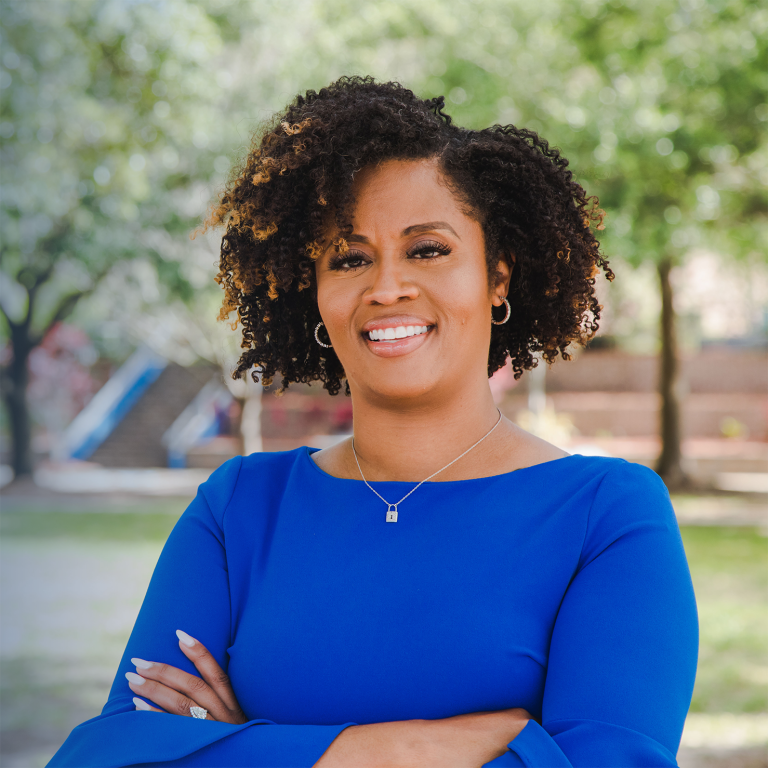
A native of Vacherie, Louisiana, Syrita Steib founded Operation Restoration, a nonprofit that works to support women and girls impacted by incarceration to recognize their full potential, restore their lives and discover new possibilities. Syrita is recognized nationally for her work on dismantling the criminal legal system.